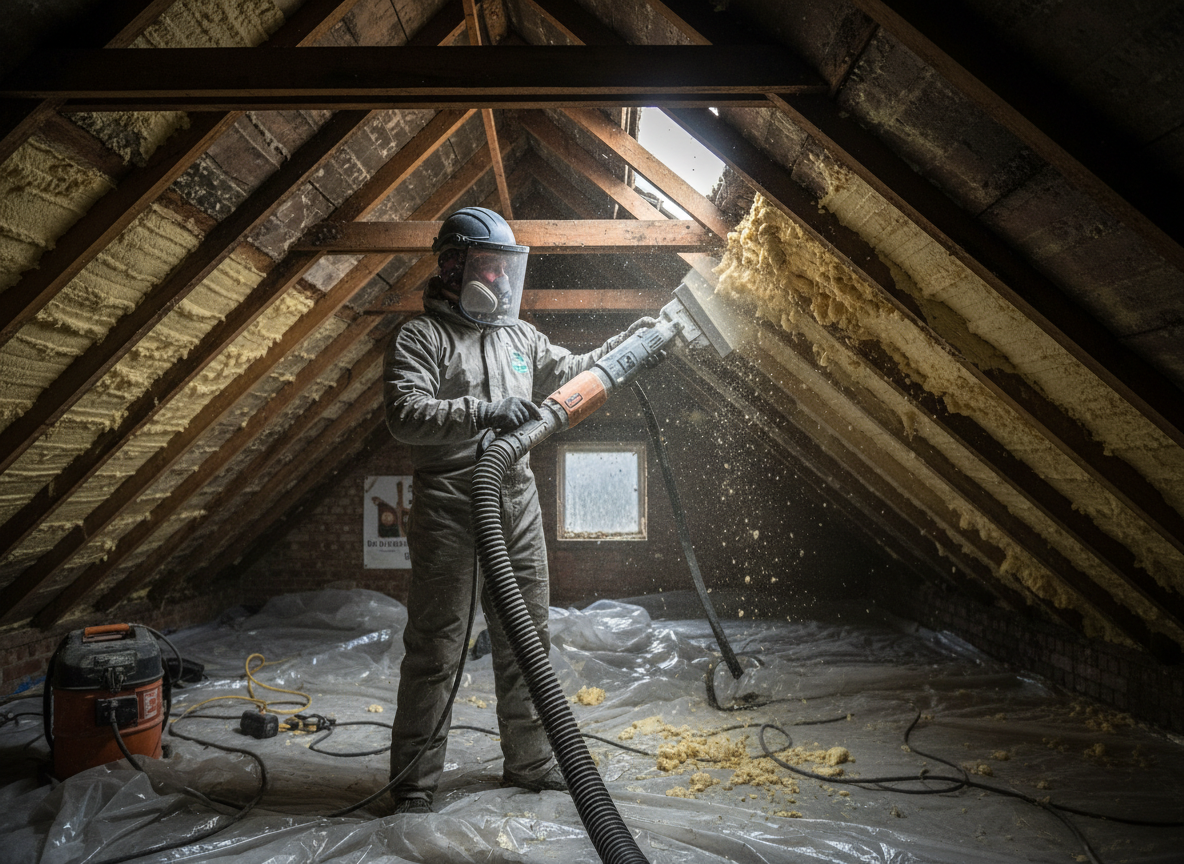
Thermal spray foam removal requires controlled heat application to break the bond without damaging underlying timber or plaster in older Huddersfield terraces. Stone-built homes common across the town often have irregular joist spacing that traps foam in pockets, making full extraction slower than in modern builds. Operators must monitor substrate temperature closely because rapid heating can crack aged lath and plaster ceilings found in properties near the town centre.
Moisture trapped behind foam in West Yorkshire roofs creates hidden rot that only appears once the material is cut away. Removal teams check for water ingress points around chimneys and valleys that are typical on pitched roofs in the Huddersfield area. Leaving any residue allows mould to return quickly once insulation is gone, especially in properties exposed to the frequent rainfall that runs off the surrounding hills.
Electrical cables and pipework embedded in foam demand extra care during thermal removal. In many HD1 and HD2 postcodes, older wiring runs straight through sprayed cavities, so sections are removed in stages to avoid nicking conductors. Proper ventilation is set up before heating begins to clear fumes, and all waste is bagged on site for licensed disposal rather than left in skips.
Homeowners sometimes attempt DIY scraping that leaves a thin film behind; this film prevents new insulation from adhering and can cause condensation problems later. Professional crews test adhesion after each pass and use targeted tools to reach behind rafters without widening access holes in finished ceilings.
Technician insight
In Huddersfield, the thing that catches most people out with thermal spray foam removal is the way foam fills the irregular voids behind the stone walls of Victorian terraces; the Pennine damp gets behind it and the material bonds tighter than expected, so you end up cutting more timber access than a quick job on a modern house would need.
Foam Removal in a Lockwood Terrace
Homeowner noticed damp patches on bedroom ceilings in a stone-built terrace off Lockwood Road. We found spray foam had been applied over existing mineral wool and was holding moisture against the rafters. The team used sectional heating to release the foam without disturbing the original laths, removed all residue, and left the roof void clean and ventilated.
How it works
- 1
Site Assessment
Inspect roof void or wall cavities in the Huddersfield property to map foam depth, locate services, and note any moisture staining.
- 2
Preparation and Containment
Set up dust barriers, ventilation, and access points while protecting floors and electrics typical in local stone terraces.
- 3
Thermal Extraction
Apply controlled heat to soften foam sections, cut and remove material in layers, checking for residue behind joists.
- 4
Clean and Verify
Vacuum remaining particles, inspect substrate for damage or rot, and confirm all foam is cleared before handover.
- 5
Waste Removal
Bag and remove all debris for proper disposal, leaving the space ready for new insulation or inspection.
Pricing
Cost depends on access, foam thickness and property layout; an on-site assessment gives the accurate figure.