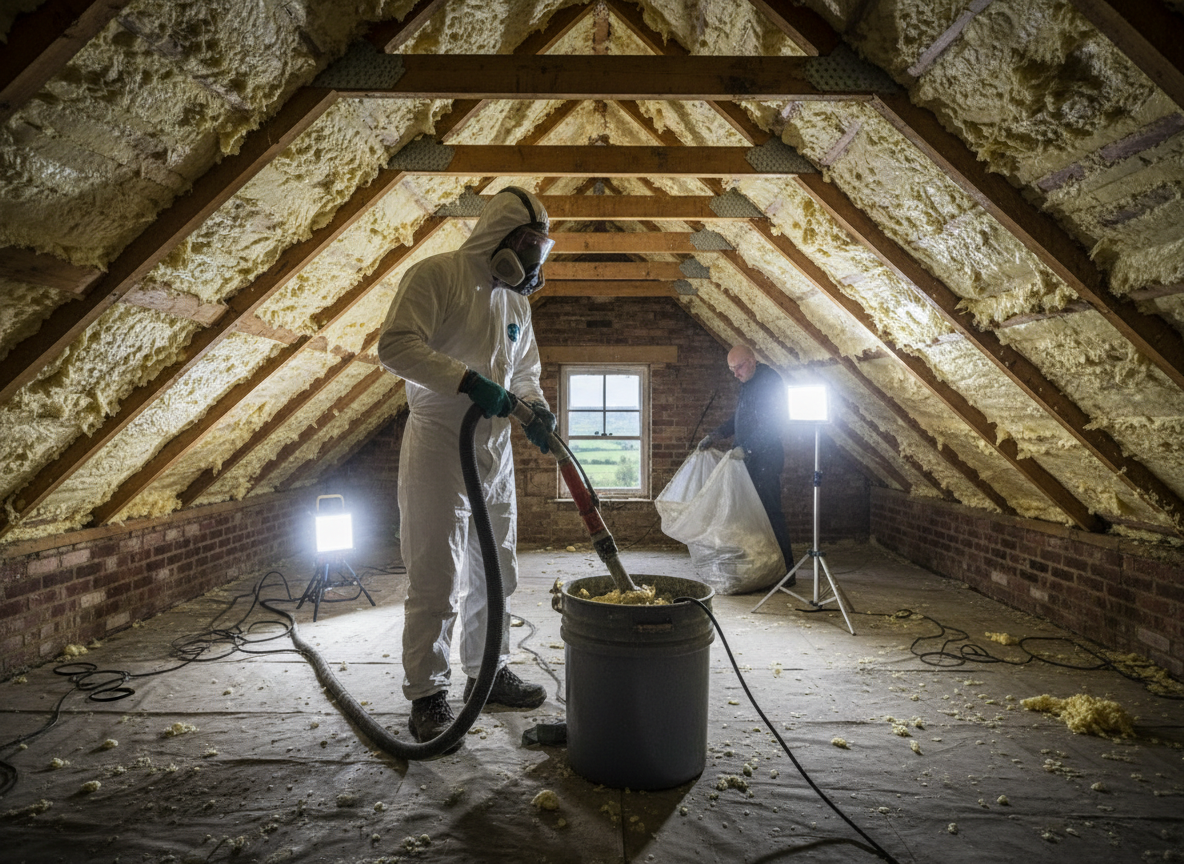
Huddersfield's Victorian and Edwardian terraced housing stock often has spray foam applied directly to roof voids and under floors during the 2000s energy upgrades. Removing it requires careful separation from original lath and plaster or timber joists without causing structural damage, especially where the foam has bonded to damp masonry from the region's frequent Pennine rainfall. Crews must ventilate the space immediately to prevent mould regrowth once the closed-cell material is cut away.
Night and weekend call-outs are common because homeowners discover water staining or musty odours after heavy rain on the steep hillsides around Lindley and Marsh. The work involves isolating electrical cables and pipework that older properties route through the same voids, then bagging and removing the foam in sections to avoid spreading debris through the house. Access through small loft hatches in two-up two-down terraces adds time compared with newer detached homes in areas like Almondbury.
West Yorkshire Building Regulations now require proper ventilation and vapour control when insulation is replaced, so removal teams document the original installation defects and leave the space ready for approved alternatives. In properties near the canal basin or on clay-heavy ground, residual moisture trapped under the foam can migrate into walls once the barrier is gone, requiring temporary dehumidification before any new work begins.
The 24/7 service from the Bath Street base allows immediate response when foam failure coincides with storms or heating failures, preventing further damage to ceilings and wiring in the compact layouts typical of Huddersfield terraces.
Technician insight
In Huddersfield, the thing that catches most people out with 24/7 Spray Foam Removal is how often the foam was sprayed over the original damp-proof course in pre-1919 terraces on the steeper slopes; once removed, the winter rain finds every missed joint and the joists start showing rot within weeks if the space isn't dried properly.
Lindley Terrace Loft Job
Homeowner in a 1900s terrace noticed ceiling stains after heavy rain. We found closed-cell foam trapping moisture against the north-facing wall. Removed the foam in sections through the small loft hatch, ventilated the void overnight and left temporary dehumidifiers running. No further staining appeared once the space could breathe again.
How it works
- 1
Site Assessment
Inspect roof void, floor voids and wall cavities to map foam coverage and identify hidden services in the specific property type.
- 2
Containment Setup
Seal rooms and install dust extraction to protect living spaces during cutting and removal in older terraced homes.
- 3
Foam Extraction
Cut and bag the material in sections, clearing bonded areas from joists and masonry without disturbing original structure.
- 4
Ventilation and Clean
Remove debris, ventilate the space and check for moisture issues common after Pennine weather exposure.
- 5
Final Documentation
Record condition for any follow-on insulation work required under current regulations.
Pricing
Pricing varies by property age, void size and access difficulty in local terraces; site visit required for accurate scope.