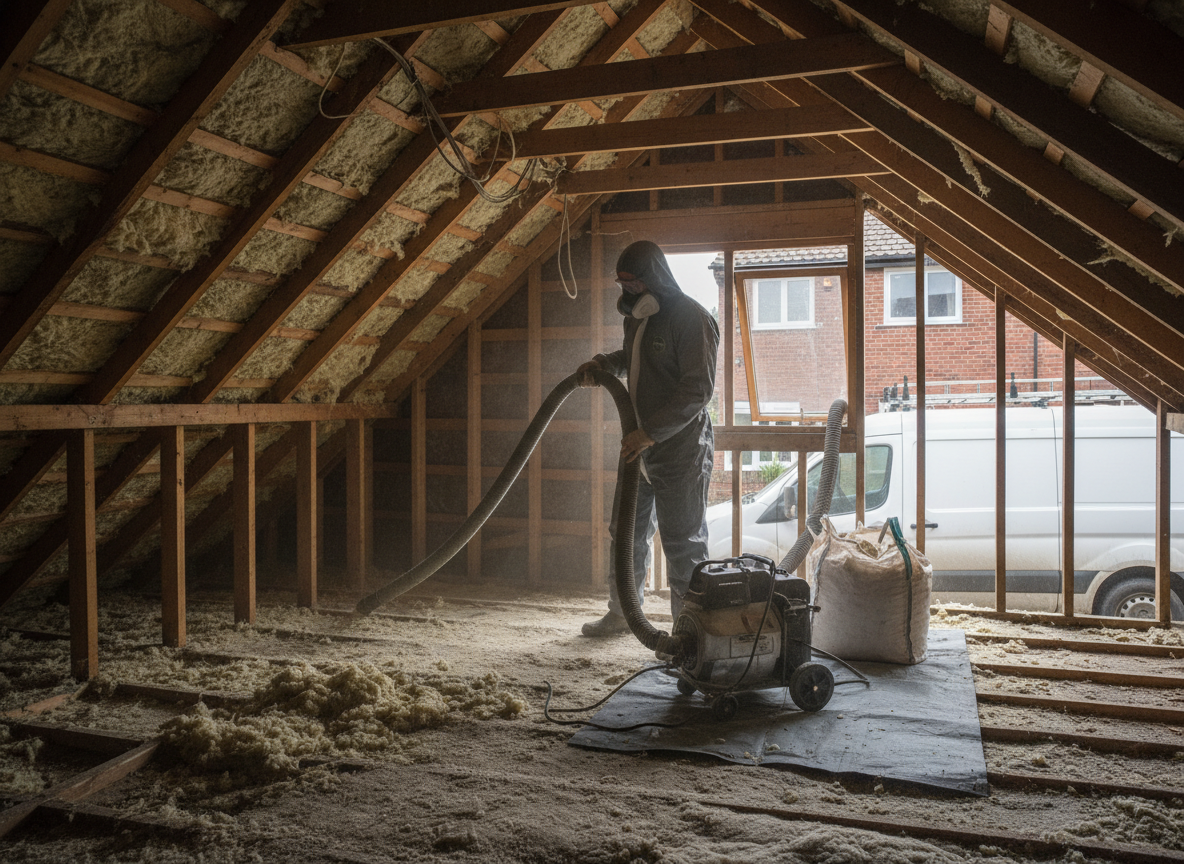
Huddersfield's older housing stock, particularly Victorian terraces and stone-built properties common in areas like Marsh and Paddock, often features narrow roof voids and limited access points that complicate spray foam extraction. Removing cured polyurethane foam requires careful cutting and vacuum techniques to avoid damaging original lath and plaster ceilings or timber joists, which can be fragile after decades of exposure to West Yorkshire's frequent rainfall. Edge cases include foam that has bonded directly to wiring or pipework, demanding slow, methodical work to prevent electrical or plumbing issues during the process.
Homeowners sometimes discover spray foam was applied over existing damp problems in properties near the Huddersfield Narrow Canal or on sloped terrain around Lindley. This creates hidden moisture pockets that must be addressed before any new insulation goes in, as trapped water can lead to rot in floor joists or wall plates. Local building practices from the early 1900s mean many homes lack modern ventilation paths, so removal crews must restore airflow routes that were blocked during the original installation.
West Yorkshire planning rules around conservation areas in central Huddersfield can affect how debris is handled and disposed of during large-scale removals. Technicians working from 28 Bath Street routinely encounter cases where foam has expanded into eaves or party walls shared with neighboring terraces, requiring coordinated access and careful boundary work to stay compliant without disturbing adjacent properties.
Technician insight
In Huddersfield, the thing that catches most people out with insulation removal service is how often spray foam has been pumped into the eaves of 1890s stone terraces without any ventilation gaps, so when you start cutting it out you find it has wicked moisture right into the wall plates along the back-to-back houses in neighborhoods like Newsome.
Foam removal from tight terrace void
A homeowner in a Marsh terraced house found spray foam blocking airflow in the roof space after noticing musty smells. Inspection revealed foam bonded to original timber and wiring runs. The team cut and extracted the material section by section, restored ventilation paths, and cleared all debris without disturbing neighboring properties.
How it works
- 1
Initial Inspection
Technicians assess the property's roof void, access points, and any existing damage in Huddersfield homes, noting foam depth and bonding locations.
- 2
Containment Setup
Dust sheets and extraction equipment are positioned to protect living spaces below while preparing for foam cutting and removal.
- 3
Foam Extraction
Specialist tools cut and vacuum the cured spray foam in sections, working around joists, wiring, and any original features typical of local terraces.
- 4
Site Clearance and Check
All debris is removed from the property, followed by a final check for remaining material or access issues before handover.
Pricing
Costs vary by property size, foam thickness and access difficulty; upfront quotes provided after site visit.