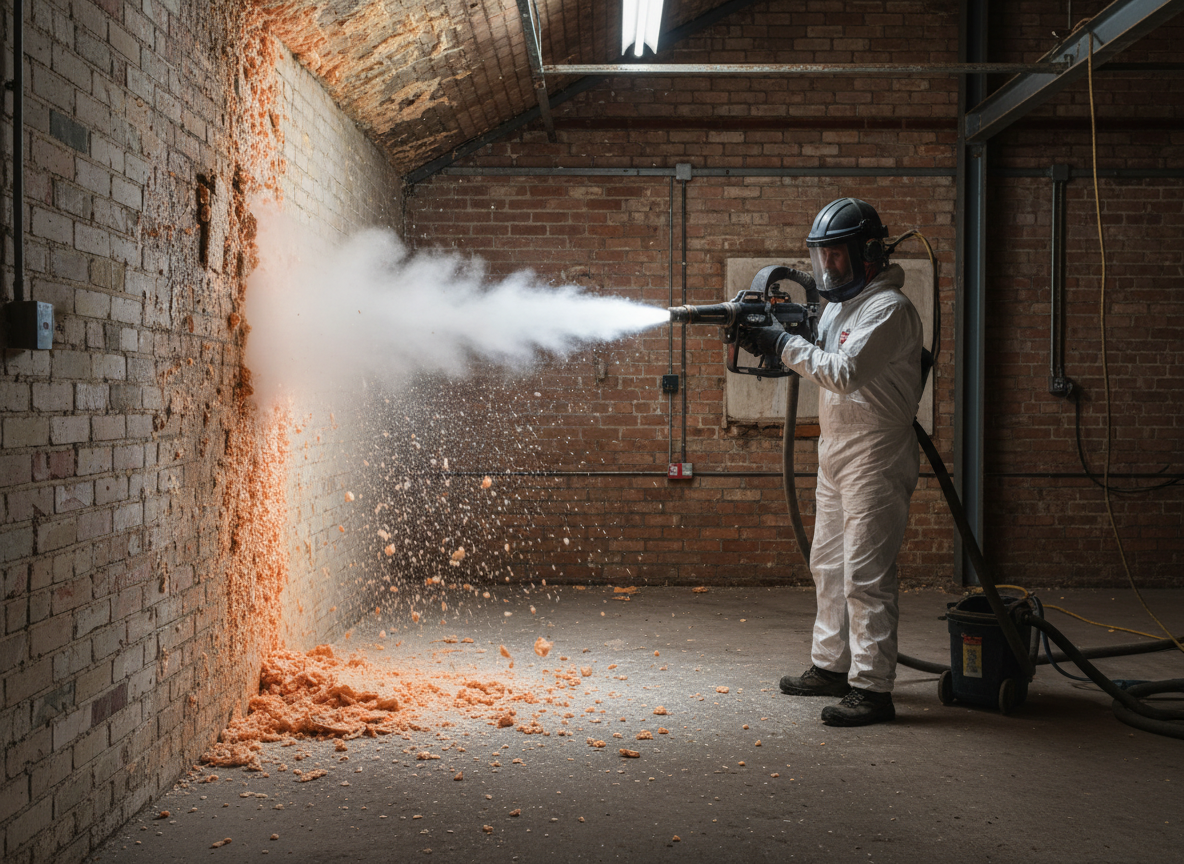
Dry ice blasting uses solid CO2 pellets accelerated at high velocity to strip spray foam insulation from roof voids and wall cavities in Huddersfield terraces. The process leaves no residue and avoids the moisture introduction common with water-based removal methods. In West Yorkshire stone-built homes from the 1890s onward, foam often bonds directly to irregular masonry, requiring precise nozzle angles to prevent surface pitting on the softer Yorkstone.
Older Huddersfield properties frequently show hidden damp behind closed-cell foam because the impermeable layer traps condensation from the frequent Pennine rainfall. Dry ice blasting reveals these issues early by removing the foam in controlled layers, allowing inspection of timber joists and pointing before re-insulation. Operators must monitor pellet feed rates carefully on lath-and-plaster ceilings common in HD1 and HD2 postcodes to avoid cracking the fragile horsehair plaster.
Ventilation during blasting is critical in the compact roof spaces of back-to-back houses around the town centre. The sublimating CO2 displaces oxygen quickly, so continuous extraction fans and monitoring keep the workspace safe. After removal, any remaining foam in awkward corners around chimney stacks or valley gutters is finished by hand to prevent future water tracking along the stonework.
Technician insight
In Huddersfield, the thing that catches most people out with dry ice blasting spray foam removal is the way older stone terraces hold moisture behind the foam. Once the pellets clear the insulation you often find saturated timber joists near the eaves where Pennine rain has been sitting for years. Homeowners expect a quick clean removal but the job lengthens when we have to stop and treat the damp before it spreads further into the lath and plaster.
Hidden Damp Revealed in HD1 Terrace
Foam in the loft of a 1900s stone terrace near the town centre had caused recurring condensation stains on bedroom ceilings. Dry ice blasting cleared the closed-cell layer in two days and exposed saturated rafters and failed pointing around the chimney. We removed the remaining foam by hand, dried the timber, and advised on ventilation improvements before the owner arranged new insulation.
How it works
- 1
Site Assessment
Inspect roof void or cavity access points, check for hidden damp, and map foam thickness across the Huddersfield property.
- 2
Protection Setup
Seal floors, electrics and any stored items, then position extraction fans to manage CO2 levels during blasting.
- 3
Dry Ice Blasting
Apply CO2 pellets at controlled pressure to lift foam from stone, brick and timber without surface damage.
- 4
Debris Removal and Final Check
Vacuum all loosened material, inspect exposed surfaces for rot or pointing failure, and confirm clean substrate ready for new insulation.
Pricing
Cost depends on foam depth, access difficulty in older stone terraces, and total area treated; site visit required for accurate quote.