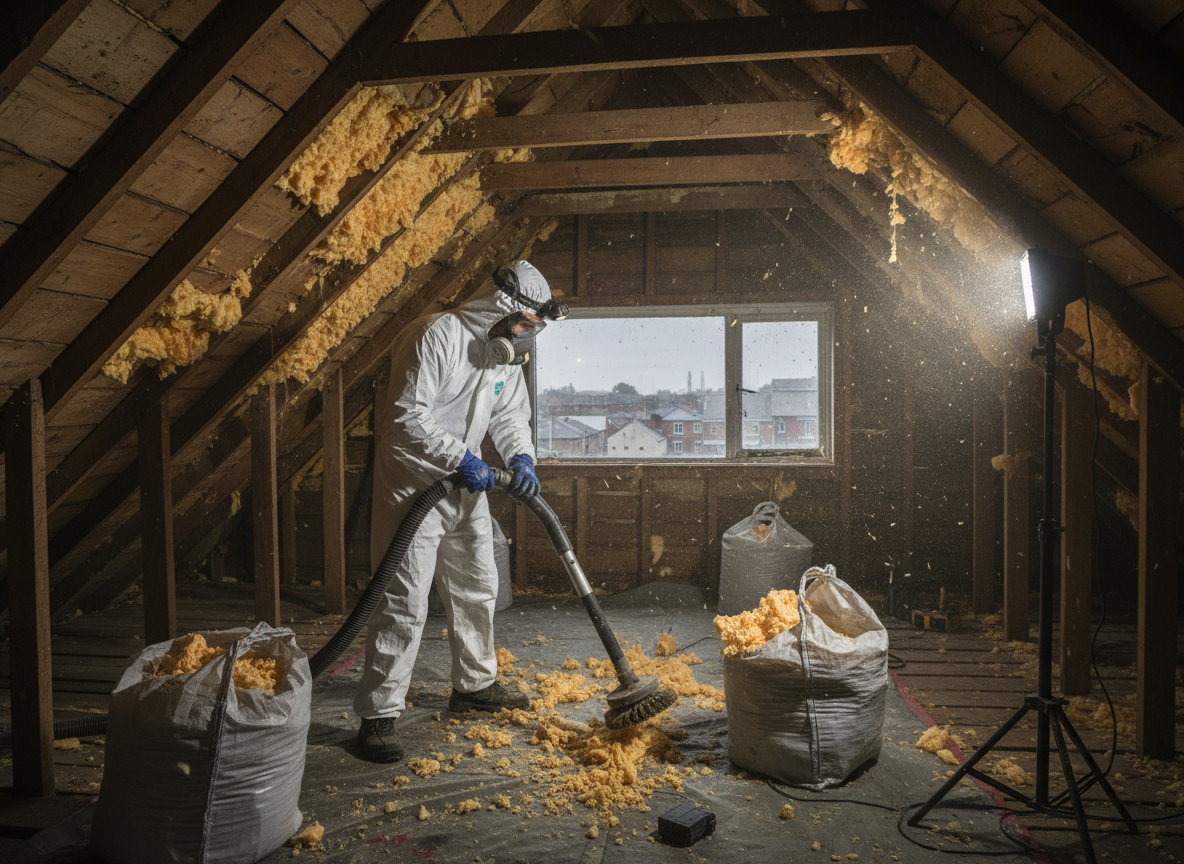
Attic spray foam in Huddersfield properties often sits between rafters in homes built before 1910 where roof voids are narrow and ventilation is limited. Removing it requires cutting back insulation without damaging original timber or plaster ceilings below. In winter months when temperatures drop sharply on the Pennine slopes, any remaining foam can trap moisture against cold roof timbers, leading to rot that spreads along shared walls in terraced rows.
Homeowners in areas like Marsh and Paddock commonly find closed-cell foam installed over original lath and plaster. Extraction involves sectioning the foam, vacuuming residue, and checking for hidden water ingress from slipped tiles during heavy rain. We always inspect for asbestos in older underfelt before starting, a step that prevents delays once work begins inside the void.
After removal we install new ventilation along the eaves and ridge to restore airflow, especially important on north-facing roofs that stay damp longer. Leaving foam in place during spring can mask leaks until summer storms arrive, so timing the job before the wet season prevents larger repairs later.
Technician insight
In Huddersfield, the thing that catches most people out with Attic spray foam removal is the narrow roof voids in Victorian terraces around the town centre. Once foam is in, any roof leak from winter storms sits against the timbers unseen until rot reaches the party wall. We always check the shared chimney stacks first because foam often bridges them and pulls moisture across from the neighbour's side.
Marsh Terrace Attic
Foam had been sprayed over a leaking valley gutter on a 1890s terrace. We found water trapped along the rafters and starting to affect the ceiling below. After careful section removal and timber treatment we added ridge ventilation and confirmed the roof was watertight before leaving site.
How it works
- 1
Site Assessment
We inspect the attic from inside and out, checking rafter condition, existing ventilation, and any shared chimney stacks common in Huddersfield terraces.
- 2
Safe Removal
Foam is cut into manageable sections and extracted using industrial vacuums to limit dust settling into living spaces below.
- 3
Void Preparation
We remove residue, treat any affected timber, and confirm no hidden damp remains before new insulation is considered.
- 4
Ventilation Upgrade
New eaves and ridge vents are fitted to suit the roof pitch and prevailing wind direction across the Huddersfield area.
Pricing
Cost depends on attic size, foam depth, and access difficulty in older Huddersfield properties; upfront quote provided after inspection.